Managing Blood Sugar Naturally: A Lahore Resident's Guide
By the Floraceutica Health Team · 5 min read
Diabetes rates have been rising steadily across Pakistan, and Lahore is no exception. Between rich, carbohydrate-heavy meals, long sedentary work hours, and Lahore's hot climate discouraging outdoor activity for much of the year, many residents find themselves managing blood sugar concerns earlier than they expected. The good news: a handful of consistent daily habits can meaningfully support healthy glucose metabolism alongside your doctor's treatment plan.
1. Rethink the Roti-to-Vegetable Ratio
A typical Pakistani plate is often heavy on roti or rice and light on vegetables. A simple, sustainable shift is to fill half your plate with vegetables first, then add your roti and protein. This naturally slows the rate at which carbohydrates hit your bloodstream, which can support more stable post-meal glucose levels.
2. Walk After Meals, Not Just in the Morning
A 10-15 minute walk after lunch or dinner has been associated with better post-meal glucose handling than the same walk done at another time of day. This is a small, realistic habit for a busy Lahore schedule — even a walk around your street or office corridor counts.
3. Be Mindful of Hidden Sugars
Chai, desserts after dinner, and packaged snacks are often the biggest hidden contributors to blood sugar spikes. You don't need to eliminate them entirely — but being aware of portion size and frequency makes a real difference over weeks and months.
4. Prioritise Sleep and Stress Management
Poor sleep and chronic stress both affect insulin sensitivity. If you are consistently sleeping less than 6-7 hours, this is worth addressing as seriously as diet — it is often the overlooked piece of the puzzle.
5. Consider Nutritional Support Alongside Your Treatment
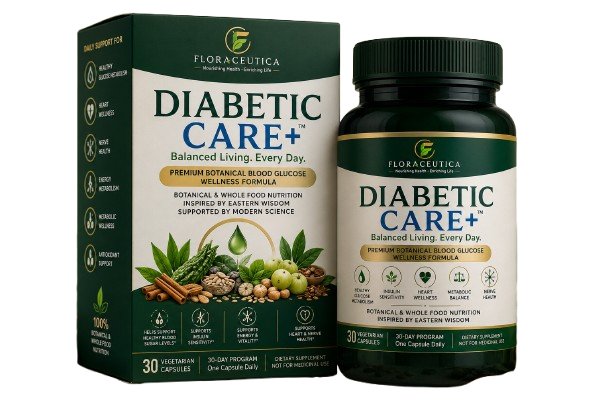
Botanicals like Gymnema Sylvestre, Cinnamon Bark and Bitter Melon have long been used in Eastern traditions to support healthy glucose metabolism. Our Diabetic Care+™ formula combines these with fiber-rich whole foods as a daily nutritional companion — always alongside, never instead of, your prescribed medication.
When to See a Doctor
If you experience unexplained weight loss, excessive thirst, frequent urination, blurred vision, or slow-healing wounds, these can be signs that require prompt medical attention. Please don't rely on lifestyle changes or supplements alone in this situation — see a physician promptly.
Managing blood sugar well is closely tied to liver and metabolic health more broadly. If you're also concerned about fatty liver or weight management, our guide on early fatty liver symptoms may be worth reading next.
⚠️ A Note On Medical Advice
This article is for general educational purposes and does not replace professional medical advice, diagnosis, or treatment. If you have concerns about your health, please consult a qualified doctor. Our free medical consultation line is available at 03117007111 (Dr. Zafar Iqbal Mian).
Related Product