Why Height Growth Slows or Stops During Puberty: Causes & Solutions
By the Floraceutica Health Team · 5 min read
Parents across Pakistan often ask the same question: "Why did my child grow so quickly one year, and then seem to stop?" Understanding the biology behind height growth — and puberty's role in it — can help set realistic expectations and guide genuinely useful support.
How Height Growth Actually Works
Height increases through growth plates (epiphyseal plates) at the ends of long bones, which produce new bone tissue during childhood and adolescence. Growth hormone, thyroid hormone, and sex hormones (estrogen and testosterone) all play a role in regulating this process.
Why Puberty Changes Everything
During puberty, rising sex hormone levels initially accelerate growth — the well-known "growth spurt." However, these same hormones, particularly estrogen, are also responsible for eventually signalling the growth plates to close. This is why growth typically slows significantly within 1-2 years after puberty is well underway, and stops entirely once growth plates fully close (usually by the late teens, though timing varies by individual).
Why Puberty Timing Matters So Much
Children who enter puberty earlier often have a shorter overall growth window, even if they grow quickly during that window. This is one reason early puberty signs — in both girls and boys — are worth discussing with a paediatrician, not to alarm parents, but to understand the growth timeline better.
What Genuinely Supports Growth During These Years
- Adequate protein intake — essential for building new bone and muscle tissue.
- Calcium, zinc and magnesium — key minerals for bone density and development.
- Consistent, sufficient sleep — the majority of growth hormone is released during deep sleep, making a regular sleep schedule genuinely important.
- Regular physical activity — particularly weight-bearing activities like running, jumping and sports.
- Avoiding chronic undernutrition — a common but under-recognised factor limiting growth potential in growing children.
A Note for Parents of Growing Girls
Girls generally begin puberty earlier than boys and their growth plates tend to close sooner. If your daughter is showing signs of early puberty, irregular periods once menstruation begins, or hormonal skin changes alongside height concerns, it can be worth looking at hormonal wellness more broadly — conditions like PCOS often first show up during the teenage years. Our guide on PCOS symptoms and management and our PCOS Support+™ formula may offer useful context, always alongside a paediatrician or gynaecologist's guidance.
Where Nutritional Support Fits
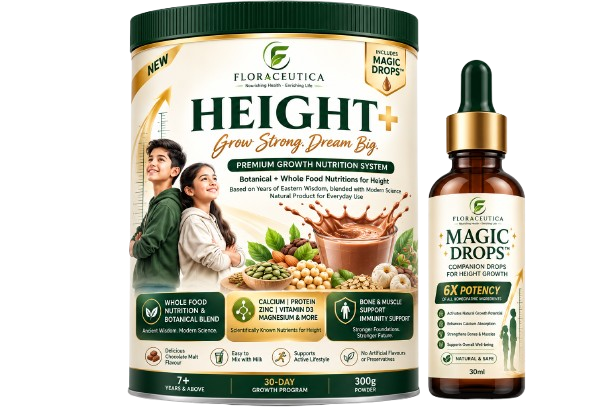
Our Height+™ growth nutrition system is designed to provide supportive daily nutrition — protein, calcium, zinc and more — during these growing years. It does not alter genetics or puberty timing, but ensures your child's body has consistent building blocks to work with during the years that matter most.
When to see a doctor: If your child's growth appears to have stopped unusually early, or if you notice signs of very early or very delayed puberty, please consult a paediatric endocrinologist for a proper evaluation rather than relying on nutrition or supplements alone.
⚠️ A Note On Medical Advice
This article is for general educational purposes and does not replace professional medical advice, diagnosis, or treatment. If you have concerns about your health, please consult a qualified doctor. Our free medical consultation line is available at 03117007111 (Dr. Zafar Iqbal Mian).
Related Product